
The power of the sun is so vital to the planet and all of us on it, that without it life would actually cease to exist.
So why the heck does the sun get such a bad rap?
Probably because of fear, and rightly so, anything done in excess can lead to disastrous results.
I remember having a room-mate in college, that was so obsessed about being tan, that she actually got sun blisters and her skin was to the point of boiling and ended up getting second degree burns on her chest and arms. That is, of course, an extreme example.
Everything in moderation and anything, as I mentioned earlier in excess usually does not end well.
So let’s talk about the benefits of the sun.
According to the U.S. National Aeronautics and Space Administration, the sun is important to Earth because it warms the seas, generates weather patterns, stirs the atmosphere and provides energy to growing plants. The plants are responsible for providing oxygen and food for life to exist on Earth.
The sun holds the planets in their orbits, makes life possible on Earth and converts hydrogen into helium. The sun is a large ball of gas that is undergoing a thermonuclear reaction, which enables it to bathe the solar system in energy.
Profile of the Sun:
Age: 4.6 Billion Years
Type: Yellow Dwarf (G2V)
Diameter: 1,392,684 km
Circumference at Equator: 4,370,005.6 km
Mass: 1,989,100,000,000,000,000,000 billion kg (333,060 x Earth)
Surface Temperature: 5500 °C
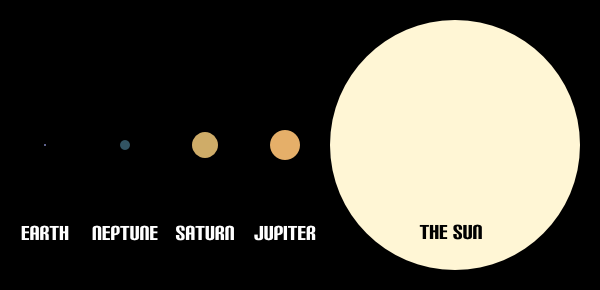
Here are some fun facts about the Sun:
- If the Sun were to “turn off”, within a week the temperature of the Earth would be 0 degrees. In a year’s time it would dip to -100 Fahrenheit (-73 Celsius)
- The Sun’s core is around 24,480,032 degrees Fahrenheit (13,600,000 degrees Celsius)
- Its temperature on the surface is 9932 degrees Fahrenheit (5,500 degrees Celsius)
- Its diameter is around 109 times bigger than Earth, but you could fit over A MILLION Earths inside the Sun.
- Light from the Sun reaches Earth in around 8 minutes.
- The Sun is 92.96 million miles or 149.6 million kilometers from the Earth.
- Many civilizations, such as the Aztec civilization in Mexico, have worshiped the Sun.
- Many prehistoric stone circles, such as Stonehenge, are thought to have been built as part of religious worship involving the Sun.
- It’s made almost entirely of hydrogen, with a little helium and a few heavier gases including oxygen – and there’s even some iron.
The Importance of Vitamin D
Your body must have vitamin D to absorb calcium and promote bone growth. Too little vitamin D results in soft bones in children (rickets) and fragile, misshapen bones in adults (osteomalacia). You also need vitamin D for other important body functions.
Your body is designed to get the vitamin D it needs by producing it when your bare skin is exposed to sunlight. The part of the sun’s rays that is important is ultraviolet B (UVB). This is the most natural way to get vitamin D.
In addition, Vitamin D is important to a healthy immune system.
Like anything in life to much of a good thing can cause issues, however in our sedentary inside dwellings lifestyle may be robbing ourselves of this most important life giving and life sustaining force.
While you’re catching some rays this summer, think about vitamin D. Sometimes called the “sunshine vitamin” because it’s produced in your skin in response to sunlight. Vitamin D is a fat-soluble vitamin in a family of compounds that includes vitamins D1, D2, and D3. It can affect as many as 2,000 genes in the body.
How much sunshine or vitamin D do you need?
The Institute of Food and Agricultural Sciences (IFAS) reports new intake recommendations (based on international units—IUs—per day):
- Children and teens: 600 IU
- Adults up to age 70: 600 IU
- Adults over age 70: 800 IU
- Pregnant or breastfeeding women: 600 IU
