
Let’s face it, getting injured or even slightly injured is probably something that’s more common than not when it comes to calisthenics and in general any sport for that matter, and I’m not being negative it’s just reality.
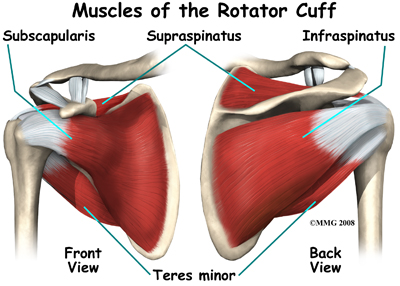
There are precautions that we can take, but to say that you won’t ever get injured or at least a little bit dinged up as a result of working out would be misleading and just downright false. The last 3 – 4 months I have been dealing with an excruciating right shoulder injury centered around my subscapularis and supraspinatus. It has gotten so bad that I can’t even lift my right arm above my head.

For this post,I want to discuss the following:
- A little bit about injuries
- Why I think they happen
1. A little bit about injuries
I recently went to get an ultra-sound on my shoulder. The results were quite formal and rather difficult to understand, here are the results:
Ultra-sound right shoulder. It is observed in the sheath liquid biceps tendon , tenosynovitis bicipital.Tendon to assess clinically subscapularis and infraspinatus unchanged significativas.Se observed slight thickening and decreased echogenicity of the supraspinatus tendon , with no clear solution of continuity , suggestive of tendinopathy . Significant attention supraspinatus tendon entrapment with dynamic maneuver. bursitis.Probables degenerative changes in acromioclavicular articulation with hypertrophy capsula.Se irregularity observed in the cortex of the humeral Cabera of unspecific characteristics are identified, but could not rule out the case of small fissure. A correlate clinically . No other alterations.
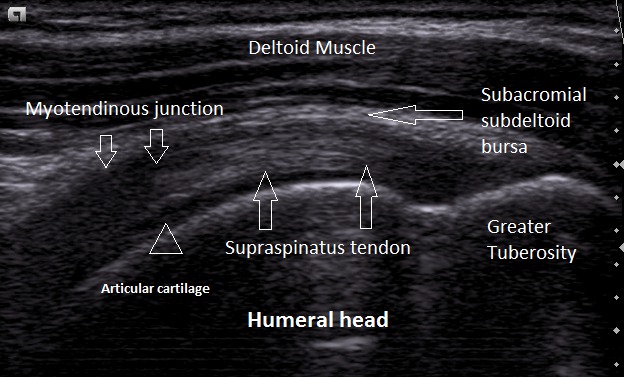
As you can see, there are quite a lot of medical terms and if it weren’t for the wonders of Google I would probably be lost. Now granted I had it translated by Google because it was originally in Spanish.
But after taking this to my spanish speaking chiropractor and my Rolfing specialist, they both concluded the same thing:
An inflammation of the biceps tendon and supraspinatus. Suggested I get rest and a physical therapy.
Basically I injured my supraspinatus tendon and as a result negatively effected my subscapularis muscle. The supraspinatus tendon essentially was inflammed as a result of doing too many repititions. Supraspinatus Inflammation. The supraspinatus muscle runs along the top of the shoulder-blade and inserts via the tendon at the top of the arm or humerus bone. It is one of the rotator cuff muscles.
As the supraspinatus inflamed it caused imbalanced movement in my right shoulder, or more so, I caused in imbalance and my subscapularis muscle became inflamed as well. The subscapularis is a large triangular muscle which fills the subscapular fossa and inserts into the lesser tubercle of the humerus and the front of the capsule of the shoulder-joint.
Let’s stop for a second, to examine the most common types of injuries which are sprains, strains, and soft-tissue injuries.
- Muscle sprain, is a stretching or tearing of ligaments — the tough bands of fibrous tissue that connect two bones together in your joints. The most common location for a sprain is in your ankle.
- Muscle strain, muscle pull, or even a muscle tear refers to damage to a muscle or its attaching tendons. You can put undue pressure on muscles during the course of normal daily activities, with sudden heavy lifting, during sports, or while performing work tasks.
- Soft tissue injury (STI) is the damage of muscles, ligaments and tendons throughout the body. Common soft tissue injuries usually occur from a sprain, strain, a one off blow resulting in a contusion or overuse of a particular part of the body.
Tendon inflammation, or in my case, tendon sheath inflammation is typically the result of injury to the tendon or surrounding muscle or bone. It’s not limited to athletes and appears in patients who perform a variety of repetitive-motion activities, such as assembly line work, weeding, and typing. People working in certain jobs appear to have greater risk of it than others, including:
carpenters
dentists
musicians
office workers
The top seven (7) common sports injuries according to WebMD are:
- Ankle sprain
- Groin pull
- Hamstring strain
- Shin splints
- Knee injury: ACL tear
- Knee injury: Patellofemoral syndrome — injury resulting from the repetitive movement of your kneecap against your thigh bone
- Tennis elbow (epicondylitis)
2. Why I think they happen
Reason #1 – Listen to your body.
So how did all of this happen?
How is it possible, even after I wrote that great little article all about the beauties of the shoulder?
Well I have my suspicions, and for starters the vast majority of us have been brought up in the formal school system and I believe this a big part of why we just done listen to our own bodies. According to the Center for Public Education, “Most students require between 175 and 180 days of school and/or between 900 and 1,000 hours of instructional time per year, depending on the grade level.”
Now say we are in school from age 6-18.
That’s 12 years times 1,000 hours. That is 12,000 hours of other people telling us when to go to the bathroom, when to eat, when to play, when to get up, when to sit down. 12,000 hours.
Now add that to how many times do you think your mom and dad told you, you can’t or don’t do that, or just plain no?
I would venture to say that that number is in the ten’s of thousands.
And we wonder why we are so externally motivated and not in tune with hearing or trusting our own judgement let alone what are body is telling us.
When I was working out, doing pull ups on the gymnastic rings, I felt for nearly 6-7 weeks a sharp pain in the right shoulder, and I ignored it. I told my body to, “Shut up! I am in charge.”
And I continued on.
Dumb, Dumb. Dumb.
Now I am paying for my own stupidity.
Please do not make the same mistake as I did. Listen to your body.
Reason #2 – Quality over quantity (Mastery)
Another reason I believe I injured myself, was that I was focused on quantity and not quality. I was so freaking obsessed with more more more, that I lost sight of the big picture, and I was not focused on mastery. Check out my fitness log:
 Each line was a set.
I was doing 25-30 sets. Averaging 500-600 reps.
Just way too much.
The reason my shoulder got inflamed was pretty clear. And worse of all I continued despite the pain.
Reason #3 – Take your time
The last and final reason, was that I was so intent on my time. I was so intent on speed and watching the clock that I was not focused on taking my time. I would have been better off just practicing negative movements.
I was so fixed on the YouTube athletes that I saw doing these crazy feats that I never stopped to think, that they are different from me and to just be yourself and workout at your own rhythm.
It can be enticing to try to do what we see on YouTube. Trust me, don’t do it. Please don’t do it. You will pay in the end.
In conclusion, listen to your body, focus on quality and take your time. I wish I had actually followed my own advice.
Please please listen to your body. This is not a race. We are all in it for the long haul. Calisthenics is for life.
Oh yeah, and a couple of things that have made a world of difference.
If you are feeling any pain, STOP STOP STOP.
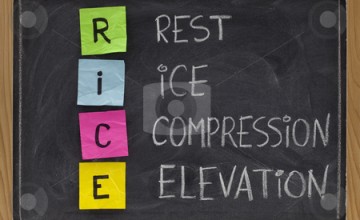
Rest and word around the injury.
If you are thick headed like me and continue on to the point that you can’t lift your arm, then I would advise to see a specialist like a chiroprator and get an x-ray and or ultra sound.
If you are having sleepless nights there are non-toxic medications you can take like:
Arnica as a gel or cream to rub on the effected area
Harpagophytum or Devil’s claw as an alternative to medication, I took the drops as it gets in your system quicker.
In addition, if you like to sleep on your side, don’t do it. Learn to sleep on your back. But if you can’t resist the temptation to sleep on your side than you might want to check out this video:
And give yourself massages two-three times a day, massaging the effected areas.
And one final thing, these two exercises are life savers, here is an excellent video on the two awesome exercises. (Time: 7:49 minutes)

1 Comment